

A legalized subdivision is one whose project was approved by the municipality and registered at the real estate registry office, as required by Federal Law 6.766/1979. That sounds like paperwork, but it's exactly what guarantees that the lot you buy has its own deed, basic infrastructure guaranteed by law, and no outstanding issue that could block your financing or your deed down the road.
What makes a subdivision "legalized"
Once the municipality approves the project, Law 6.766/1979 gives the developer up to 180 days to submit it to the real estate registry, or the approval itself expires (article 18). The registration request must come with an extensive set of documents: proof of ownership or a deed certificate, a 20-year title history, tax clearance certificates and certificates covering any legal actions on the property, a copy of the municipal approval, a guaranteed construction schedule, and the standard sales contract template. Until that registration exists, the law prohibits, in article 37, selling or promising to sell any lot in that subdivision.
How to check if a subdivision is legalized before you buy
You can't just take the seller's word for it. Before signing any proposal, ask for (and verify yourself, directly at the registry office or the municipality):
Checklist: 4 documents to request before signing anything
- An updated deed certificate from the real estate registry office, which should show that the subdivision was registered under that deed (a notarized sales contract doesn't replace this).
- A subdivision permit (or subdivision compliance certificate) issued by the municipality, proving municipal and, where applicable, environmental approval of the project.
- An environmental license for the development, where required by the municipality or the state environmental agency.
- A debt clearance certificate and property tax record for the specific lot, confirming there's no outstanding debt (including taxes) that could pass on to the buyer.
The risks of buying into an irregular or clandestine subdivision
Worth separating the two scenarios: irregular is a subdivision that applied for municipal approval but still lacks approval or registration; clandestine is one that never applied for approval or registration at all. Either way, starting or selling lots under those conditions is a crime against public administration (article 50), punishable by one to four years in prison plus a fine. If the sale, promise or reservation of the lot happens without registration, or without legitimate proof of ownership, the sentence rises to one to five years (sole paragraph of the same article). In practice, anyone who buys a lot under those conditions risks never getting an individualized deed, being left without the infrastructure that was only promised verbally, and struggling to finance, build on, or resell the property later.
Infrastructure the law requires of a legalized subdivision
Law 6.766/1979 (article 2, paragraph 5) defines a subdivision's basic infrastructure as the urban systems for stormwater drainage, public lighting, sewage, drinking water supply, public and household electricity, and streets. It's this legally required infrastructure, not just a verbal promise, that sets a legalized subdivision apart from a development that sells infrastructure "to be delivered later."
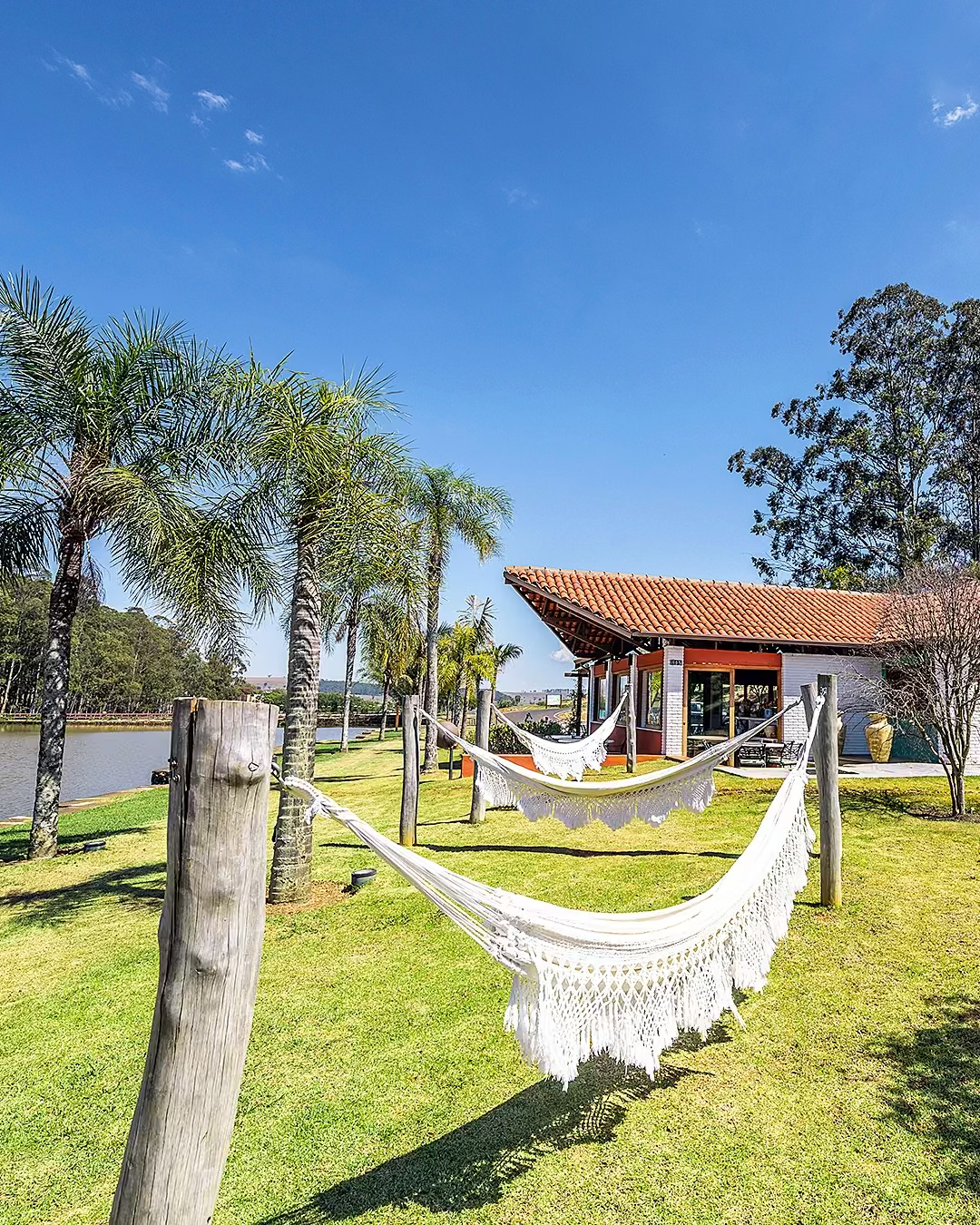
Security and community life in a legalized gated subdivision
When the subdivision is also gated, the legal status doesn't change (it's still the same Law 6.766/1979). What's added is the physical enclosure of the area, with a gatehouse, access control and security patrols, run by a homeowners' association, plus internal rules of community life (use of common areas, upkeep of facades, respect for neighbors) set out in their own regulations.
A legalized subdivision also holds its value better
A lot with its own deed, delivered infrastructure, and no outstanding paperwork issues is easier to finance, to use as collateral, and to resell later, which tends to support more solid appreciation than a lot in an irregular situation, whose market value is penalized precisely because of the legal risk.
Quick comparison
| Situation | Municipal approval | Registered at the registry office | Penalty for selling a lot anyway |
|---|---|---|---|
| Regular (legalized) subdivision | Yes | Yes | N/A |
| Irregular subdivision | Requested, no approval/registration | No | 1 to 5 years in prison + fine (art. 50, sole paragraph) |
| Clandestine subdivision | Never requested | No | 1 to 5 years in prison + fine (art. 50, sole paragraph) |
Is Riviera de Santa Cristina XIII a legalized subdivision?
Yes. Riviera de Santa Cristina XIII is a regularized gated subdivision, with individually deeded lots across the Marina and Iate sectors, delivered infrastructure (roads, lighting, water, security) and balance adjustment by IGPM. See the difference between land, lot and subdivision in the previous post on this blog, or check the full lot map before scheduling a visit.
Want to confirm the paperwork for a specific lot before deciding? Reach our team through the contact form.
Frequently asked questions
What does "legalized subdivision" mean?
It's a subdivision with a project approved by the municipality and registered at the real estate registry office, as required by Law 6.766/1979. Registration, not municipal approval on its own, is what actually gives the subdivision its legal existence.
How do I check if a subdivision is legalized before buying?
By requesting an updated deed certificate from the registry office (which should show the subdivision's registration), the municipal permit or compliance certificate, the environmental license where required, and a debt/property tax clearance certificate for the specific lot.
What's the difference between an irregular and a clandestine subdivision?
Irregular is a subdivision that applied for municipal approval but still lacks approval or registration. Clandestine is one that never applied for approval or registration at all. Both are barred from selling lots, and either can amount to a crime under article 50 of Law 6.766/1979.
Is a gated subdivision the same thing as a legalized subdivision?
Not necessarily. "Gated" describes physical access control (a gatehouse, fencing); "legalized" describes the paperwork status (approval and registration). A subdivision can be gated and still be irregular if it lacks the registration the law requires.
Is Riviera de Santa Cristina XIII a legalized subdivision?
Yes. It's a regularized gated subdivision, with an individualized deed per lot and delivered infrastructure across the Marina and Iate sectors.